

Stop Guessing and Start Verifying Your Backlink Profile Today
Why Your Backlink Profile Could Be Silently Hurting Your Rankings

Verify backlinks before they damage your SEO — because a link that looked great last month may be broken, blocked, or toxic today.
Here's how to do it quickly:
Export your backlink list from your SEO tool or vendor as an Excel or CSV file
Upload that file to a live verification tool (not just a database checker)
Review each link's status — HTTP errors, noindex tags, robots.txt blocks, and follow attributes
Label each link: Keep, Review, or Consider Disavow
Download your audit outputs — Excel report, PDF summary, and a ready-to-submit disavow.txt file
Most small business owners assume their backlinks are working simply because they were placed. They're often wrong. Links go offline, pages get noindexed, and placements disappear — sometimes within weeks. And with AI-powered search engines like Google, ChatGPT, and Perplexity now using backlinks as trust signals for brand citations, a weak or toxic link profile can quietly suppress your visibility across both traditional and AI search results.
The tools most people rely on — Ahrefs, Semrush, SE Ranking — crawl the web and store data in massive databases. Semrush indexes over 43 trillion backlinks. Ahrefs updates its index every 15 minutes. These are powerful tools. But they show you cached snapshots, not always what's live on the page right now.
That gap is where problems hide.
I'm Carlos Cortez, senior consultant at S9 Consulting, and over two decades of building and scaling digital operations — from e-commerce systems to SEO infrastructure — I've seen how unverified backlink profiles quietly erode search performance; learning how to properly verify backlinks has been a core part of every technical SEO engagement I run. Let's walk through exactly how to do it right.

Why You Must Verify Backlinks for Modern SEO and AI Search
In the early days of search engine optimization, link building was purely a numbers game. The more links you had pointing to your site, the higher you ranked. Today, search engines have evolved far beyond basic math. Modern search algorithms prioritize trust, relevance, and contextual authority. To build that trust, you need high-quality SEO Backlinks.
However, acquiring links is only half the battle. If you do not regularly Check Incoming Links, you are flying blind. A backlink is essentially a public recommendation from another website. If that recommending website suddenly becomes spammy, gets hacked, or redirects its pages to irrelevant content, Google’s algorithms may associate your site with that poor-quality neighborhood. This is where negative SEO attacks or natural "link rot" can silently drag down your organic performance.
Furthermore, the rise of AI-powered search engines has completely changed the stakes for brand citations. When conversational engines like ChatGPT, Claude, or Perplexity answer user queries, they do not just look at keywords; they scan the web's relationship graph to see which authoritative sources validate your business. If your backlinks are broken or unverified, these AI models may ignore your brand entirely when generating answers.
To protect your rankings, you must proactively manage your off-page profile. Using a specialized tool like Check My Backlinks Before They Hurt SEO | Verify Backlinks allows you to run live URL checks to confirm that your hard-earned links are still active, crawlable, and passing value.
Traditional Database Checkers vs. Live Verification Tools
When most marketers think about checking links, they immediately turn to traditional index-based tools. It makes sense; these platforms have built jaw-dropping databases over the years.
To put their scale into perspective:
Semrush features a database containing over 43 trillion backlinks and 390 million referring domains, with updates refreshed hourly.
Ahrefs operates an incredibly active web crawler, maintaining a database of 35 trillion external historical backlinks that updates every 15 minutes.
SE Ranking houses an index of 2.7 trillion backlinks and 420 million domains, crawling 6 billion pages daily.
You can easily explore these massive indexes using tools like:
While these platforms are phenomenal for competitor research and high-level tracking, they have a fundamental limitation: they rely on cached data. For example, about 58% of the backlinks in SE Ranking's database are updated every 90 days. If a partner site deletes your link or adds a noindex tag today, it could take weeks or even months for a traditional database crawler to revisit that page and update your dashboard.
A live verification tool, on the other hand, does not rely on a pre-built index. Instead, it visits the exact URLs you provide in real time. It acts like a browser, checking the live code of the page to confirm whether your link is physically present, if it is followed, and if search engines are allowed to crawl it.
If you want to protect your investment, you should Perform a Backlink Audit on Your Website using live checks rather than relying solely on cached index reports.
Feature / Metric | Traditional Database Checkers | Live Verification Tools |
Primary Use Case | Competitor research, discovery of unknown links | Auditing known lists, vendor validation, link cleanup |
Data Source | Proprietary cached database indexes | Live, real-time HTTP requests to target URLs |
Update Frequency | Every 15 minutes to 90 days (depending on page popularity) | Instantaneous (runs on-demand) |
Indexability Analysis | High-level (may miss recent robots.txt or canonical changes) | Deep code-level check (robots.txt, meta tags, headers) |
Pricing Model | Monthly recurring subscriptions | Pay-per-audit (no ongoing subscriptions) |
Error Logging | Limited to last crawl data | Detailed live error codes (timeouts, 404s, 500s) |
How to Verify Backlinks: A Step-by-Step Live Audit Guide
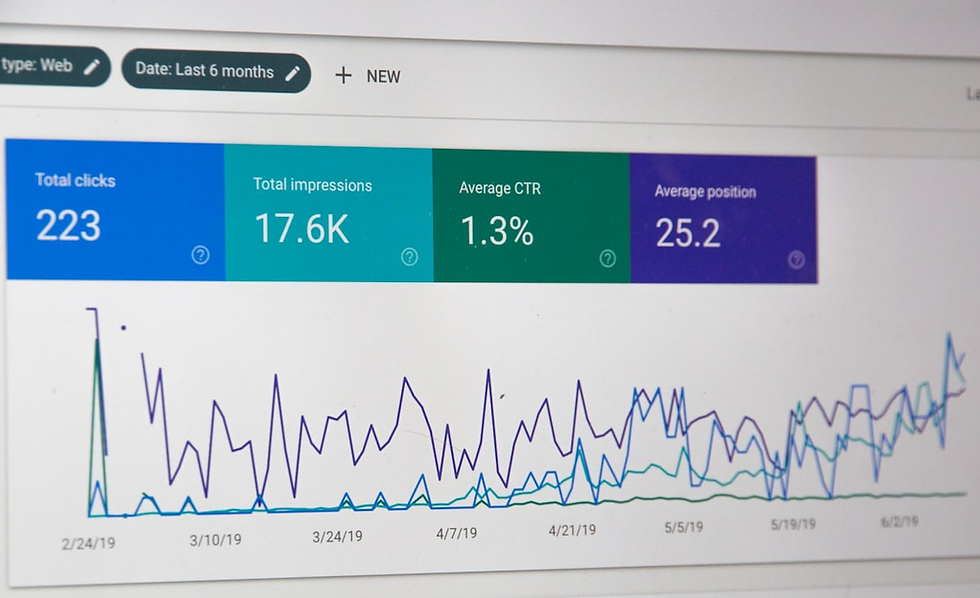
Running a live audit allows you to stop guessing and start making data-driven decisions. When we compile a Backlink Audit Report for our clients, we follow a rigorous verification process. Here is how you can perform one yourself:
Step 1: Gather Your Backlink Sources
Collect your backlink data from every source available. Export your links from Google Search Console, your favorite database checkers, and any spreadsheets provided by your link-building vendors or guest-blogging campaigns.
Step 2: Clean and Consolidate Your List
Combine your exports into a single Excel or CSV file. Remove duplicate target URLs so you are not wasting resources auditing the exact same page multiple times.
Step 3: Run the Live Verification Audit
Upload your consolidated list to a live verification tool. The tool will ping each URL individually to analyze over 30 distinct technical signals.
During this process, the tool performs critical indexability checks:
Robots.txt Analysis: It verifies if the linking page is blocked by the host's robots.txt file, which would prevent search engines from crawling and counting your link.
Noindex Tag Detection: It scans the HTML header and meta tags for noindex directives. If a page has a noindex tag, search engines will drop it from their indexes, rendering your backlink useless.
Canonical Conflicts: It checks if the page points to a different URL via a rel="canonical" tag. If it does, the link equity (or "link juice") may be redirected away from your site.
Follow Attributes: It identifies whether your link is marked as dofollow, nofollow, sponsored, or ugc. While all links have some branding value, followed links are the primary drivers of search authority.
Step 4: Analyze the Error Logs and Risk Labels
Once the audit completes, review the live status codes. If a link returns a 404 (Not Found) or 500 (Server Error), or if the request times out, you know immediately that the link is offline. The tool will automatically label each link as Keep, Review, or Consider Disavow.
Why Pre-Index Audits Matter When You Verify Backlinks
Many SEOs make the mistake of auditing their links only after they have been indexed. By then, the damage may already be done.
A pre-index audit involves verifying backlinks before search engines crawl or index them. When you purchase guest posts, secure niche edits, or receive a deliverable from a link-building agency, you should run a pre-index audit immediately.
This proactive step helps you:
Preserve Your Crawl Budget: Google only spends a limited amount of time crawling any given site. Directing search crawlers to broken, redirected, or low-quality linking pages wastes your crawl budget.
Maximize Link Equity: You can catch missing placements, incorrect anchor texts, or accidental nofollow tags before they are locked into search engine caches.
Avoid Google Penalties: If a vendor delivers spammy, toxic, or low-quality links, you can catch them before Google associates them with your brand. If you find highly suspicious links that you cannot get removed, you can Disavow Harmful Links to Clean Your Backlink Profile to prevent algorithmic search penalties.
How to Verify Backlinks in Bulk Using Excel or CSV Uploads
If you are managing a large-scale website, an active e-commerce store, or running multiple outreach campaigns, verifying links manually is impossible. Bulk processing is the only scalable solution.

Whether you are verifying a fresh batch of vendor deliveries or trying to Reverse Engineer Your Competitor's Backlink Strategy, bulk uploads streamline the entire process.
To run a bulk audit:
Format your spreadsheet so that all your target backlink URLs are in a single column.
Upload the CSV or Excel file directly to your live verification tool.
Let the system process the URLs in the background. High-quality tools can process thousands of links in minutes, pinging each server safely without getting blocked.
Once completed, use the data to launch lost link recovery campaigns (reaching out to webmasters where your link was accidentally removed) or to clean up your active profile.
Frequently Asked Questions About Backlink Verification
What is the difference between pre-index and post-index backlink audits?
A pre-index audit is performed on newly acquired links before search engine crawlers discover them. Its goal is to catch setup errors, missing links, or incorrect attributes immediately so you can resolve them with your link vendor or partner.
A post-index audit is conducted periodically on your existing link profile. It checks the live URL status of links that have already been indexed to ensure they have not gone offline, changed to nofollow, or been placed on pages that are now blocked from search engines.
How do live verification tools handle indexability issues like robots.txt or noindex?
Live verification tools act like search engine crawlers when they visit a page. They read the host site's robots.txt file to see if the folder containing your backlink is blocked. They also parse the page's HTML to look for <meta name="robots" content="noindex"> tags or HTTP response headers that restrict indexing. If these blocks are present, the tool flags the link for review because search engines cannot crawl or pass link juice through those pages.
What outputs do you get from a live backlink audit?
When you complete a live backlink audit, you typically receive three distinct files:
An Interactive Excel Workbook: A detailed, row-by-row breakdown of every audited URL, complete with live status codes, anchor text, follow/nofollow attributes, indexability flags, and recommended action labels.
A PDF Summary: A clean executive report highlighting your link profile's overall health, including the percentage of live vs. broken links and high-risk flags.
A disavow.txt File: A pre-formatted text file containing all the toxic or spammy links you marked for disavowal, ready to be uploaded directly to Google Search Console.
Conclusion
Maintaining a healthy, high-performing website requires continuous vigilance. You cannot afford to guess whether your off-page signals are helping or hurting your organic visibility. By taking the time to regularly verify backlinks, you protect your search rankings, improve your authority, and ensure your business remains highly visible in both traditional search results and AI discovery engines.
At S9 Consulting, we believe in building long-term partnerships with our clients in Boston, MA, Jacksonville, FL, and beyond. We don't just hand over static reports; we focus on process automation, systems integration, and technical efficiency improvements to help your business scale seamlessly.
Whether you need a comprehensive Technical SEO Audit, strategic Keyword Mapping for SEO, or an automated system to monitor your digital assets, we are here to support your growth.
Ready to take control of your search presence? Let us help you clean up your link profile and Grow Your Search Visibility today.


